


Cifrado de Imágenes con Análisis de Fluctuaciones sin Tendencia
Article Sidebar
Publicado
jun 30, 2026
##plugins.pubIds.doi.readerDisplayName##
https://doi.org/10.36677/rici.v4i2.27676
Main Article Content
Eduardo Jiménez López
 http://orcid.org/0000-0002-1883-3890
 http://orcid.org/0000-0002-1883-3890
Resumen
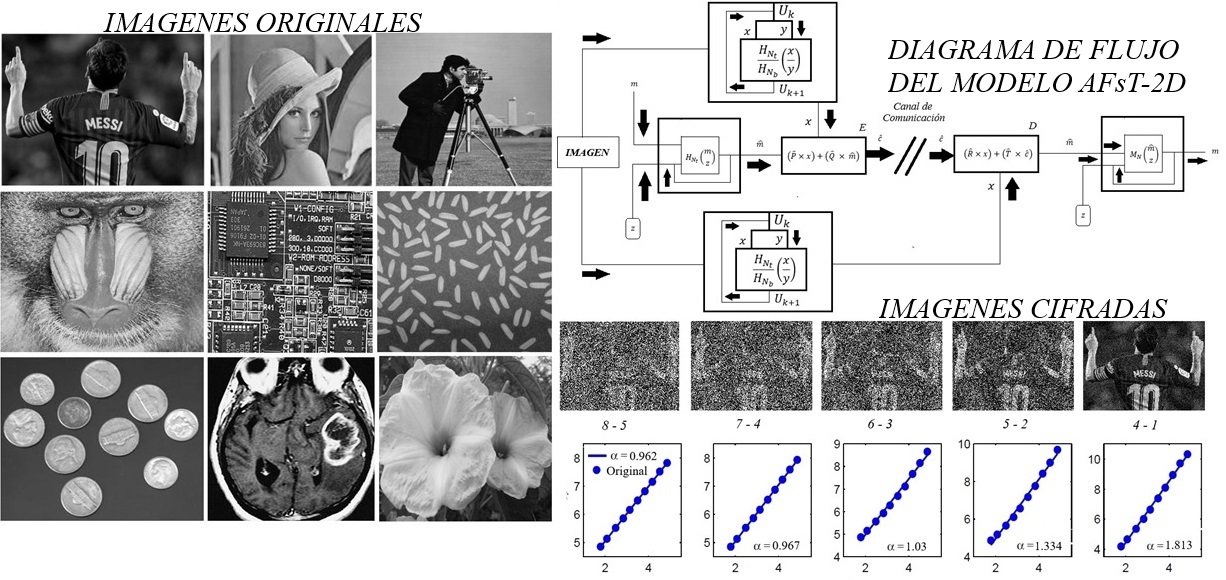
En este trabajo, se realiza una extensión del método de Análisis de Fluctuación sin Tendencia que describe las propiedades de escala de imágenes con diferentes contrastes que presentan cualidades no lineales. En este documento, establecemos las propiedades de escala en imágenes cifradas utilizando un método de análisis sin fluctuaciones sin tendencia bidimensional. Realizamos el cifrado de la imagen usando un sistema criptográfico que utiliza como principal insumo los autómatas celulares con la regla 182, contrastamos los resultados con su versión original y el sistema estándar de cifrado avanzado. La conducta de las imágenes cifradas es constante, similar al ruido 1/f, según indican los resultados numéricos.
##plugins.generic.usageStats.downloads##
##plugins.generic.usageStats.noStats##
Article Details
Como citar
JIMÉNEZ LÓPEZ, Eduardo.
Cifrado de Imágenes con Análisis de Fluctuaciones sin Tendencia.
Ideas en Ciencias de la Ingeniería, [S.l.], v. 4, n. 2, p. 54-76, jun. 2026.
ISSN 2992-7447.
Disponible en: <https://ideasencienciasingenieria.uaemex.mx/article/view/27676>. Fecha de acceso: 10 oct. 2026
doi: https://doi.org/10.36677/rici.v4i2.27676.
Sección
Artículos

Esta obra está bajo licencia internacional Creative Commons Reconocimiento-NoComercial-SinObrasDerivadas 4.0.
Citas
[1] G. Grosu, A. Hopp, V. Moca, H. Bârzan, A. Ciuparu, M. Ercsey-Ravasz and R. Mureșan, “The fractal brain: scale-invariance in structure and dynamics”. Cerebral Cortex, vol. 33, no. 8, pp. 4574-4605, 2023. https://doi.org/10.1093/cercor/bhac363
[2] M. Wang, Y. Wang, R. Xu, R. Peng, J. Wang, and J. Kim, J. “Multifractal Detrended Fluctuation Analysis Combined with Allen–Cahn Equation for Image Segmentation”. Fractal and Fractional, vol. 9, no. 5, pp. 310, 2025. https://doi.org/10.3390/fractalfract9050310
[3] R. Monjo and O. Meseguer-Ruiz, “Fractal geometry in precipitation”. Atmosphere, vol. 15, num. 1, pp. 135, 2024. https://doi.org/10.3390/atmos15010135
[4] A. Alshehri, T. Daws and S. Ezekiel, “Medical image segmentation using multifractal analysis”. International Jornal on Advanced Science Engineering Information Technology, vol. 10, no. 2, pp. 420-429, 2020.
[5] J. Wang, L. Wang, Z. Yang, W. Tan, M. Luo and Y. Liu, “Multifractal analysis of MRI. images from breast cancer patients”. Multimedia Tools and Applications, vol. 83, no. 18, pp. 55075-55090, 2024.
https://doi.org/10.1007/s11042-023-17380-9
[6] A. Ramola, A. Shakya and D. Van Pham, “Study of statistical methods for texture analysis and their modern evolutions”. Engineering Reports, vol. 2, no. 4, pp. e12149, 2020.
https://doi.org/10.1002/eng2.12149
[7] J. Ketola, S. Inkinen, J. Karppinen, J. Niinimäki, O. Tervonen and M. Nieminen, “T2‐weighted magnetic resonance imaging texture as predictor of low back pain: A texture analysis‐based classification pipeline to symptomatic and asymptomatic cases”. Journal of Orthopaedic Research®, vol. 39, no. 11, pp. 2428-2438, 2021. https://doi.org/10.1002/jor.24973
[8] A. Upadhyay, N. Chandel, K. Singh, S. Chakraborty, B. Nandede, M. Kumar and A. Elbeltagi, “Deep learning and computer vision in plant disease detection: a comprehensive review of techniques, models, and trends in precision agriculture”. Artificial Intelligence Review, vol. 58, no. 3, pp. 92, 2025. https://doi.org/10.1007/s10462-024-11100-x
[9] M. Dang, H. Wang, Y. Li, T. Nguyen, L. Tightiz, N. Xuan-Mung and T. Nguyen, “Computer vision for plant disease recognition: a comprehensive review”. The Botanical Review, vol. 90, no. 3, pp. 251-311, 2024. https://doi.org/10.1007/s12229-024-09299-z
[10] B. Selmi, “The relative multifractal analysis, review and examples”. Acta Scientiarum Mathematicarum, vol. 86, no. 3, pp. 635-666, 2020. https://doi.org/10.14232/actasm-020-801-8
[11] C. Wang and L. Song, “An image encryption scheme based on chaotic system and compressed sensing for multiple application scenarios”. Information Sciences, vol. 642, pp.119166, 2023.
https://doi.org/10.1016/j.ins.2023.119166
[12] M. Kumari and S. Gupta, “Performance comparison between Chaos and quantum-chaos based image encryption techniques”. Multimedia Tools and Applications, vol. 80, no. 24, pp. 33213-33255, 2021. https://doi.org/10.1007/s11042-021-11178-3
[13] P. Kiran and B. Parameshachari, “Resource optimized selective image encryption of medical images using multiple chaotic systems”. Microprocessors and Microsystems, vol. 91, pp. 104546, 2022.
https://doi.org/10.1016/j.micpro.2022.104546
[14] R. Ratan and A. Yadav, “Security analysis of bit plane level image encryption schemes”. Defence Science Journal, vol. 71, no. 2, pp. 209-221, 2021. https://doi.org/10.14429/dsj.71.15643
[15] A. Martin, O. Jeong, S. Park and I. Moon, “Deep Learning-based Predictive Models over Pseudo Random Number Generators”. In 2025 IEEE International Conference on Computation, Big-Data and Engineering (ICCBE), pp. 375-380. 2025. DOI: 10.1109/ICCBE65177.2025.11256123
[16] J. Pena, A. Arellano-Delgado, R. Méndez-Ramírez and H. Estrada-Garcia, “Synchronization of chaotic systems with Huygens-like coupling”. Mathematics, vol. 12, no. 20, pp. 3177, 2024.
https://doi.org/10.3390/math12203177
[17] E. Jiménez, C. Garrocho and T. Chavez, “Modelando la expansión urbana con autómatas celulares: aplicación de la estación de inteligencia territorial (Christaller)®”. Geografía y Sistemas de Información Geográfica (GEOSIG). No. 12, Sección II: Metodología. pp. 1-26, 2018.
http://www.revistageosig.wixsite.com/geosig
[18] Y. Zhao, H. Liao, Y. Zhao and S. Pan, “Data-augmented trend-fluctuation representations by interpretable contrastive learning for wind power forecasting”. Applied Energy, vol. 380, pp. 125052, 2025. https://doi.org/10.1016/j.apenergy.2024.125052
[19] M. Gospodinov, E. Gospodinova and E. Popovska, “Comparative analysis of statistical methods for estimating Hurst exponent”. In Proceedings of the 21st International Conference on Computer Systems and Technologies, pp. 148-155, 2020. https://doi.org/10.1145/3407982.3408012
[20] J. Ma, R. Wang, Y. Yu, X. Xu, H. Duan and N. Yu, “Is fractal dimension a reliable imaging biomarker for the quantitative classification of an intervertebral disk?”. European Spine Journal, vol. 29, no. 5, pp. 1175-1180, 2020. https://doi.org/10.1007/s00586-020-06370-2
[21] A. Shafique, “A noise-tolerant cryptosystem based on the decomposition of bit-planes and the analysis of chaotic gauss iterated map”. Neural Computing and Applications, vol. 34, no. 19, pp. 16805-16828, 2022. https://doi.org/10.1007/s00521-022-07327-w
[2] M. Wang, Y. Wang, R. Xu, R. Peng, J. Wang, and J. Kim, J. “Multifractal Detrended Fluctuation Analysis Combined with Allen–Cahn Equation for Image Segmentation”. Fractal and Fractional, vol. 9, no. 5, pp. 310, 2025. https://doi.org/10.3390/fractalfract9050310
[3] R. Monjo and O. Meseguer-Ruiz, “Fractal geometry in precipitation”. Atmosphere, vol. 15, num. 1, pp. 135, 2024. https://doi.org/10.3390/atmos15010135
[4] A. Alshehri, T. Daws and S. Ezekiel, “Medical image segmentation using multifractal analysis”. International Jornal on Advanced Science Engineering Information Technology, vol. 10, no. 2, pp. 420-429, 2020.
[5] J. Wang, L. Wang, Z. Yang, W. Tan, M. Luo and Y. Liu, “Multifractal analysis of MRI. images from breast cancer patients”. Multimedia Tools and Applications, vol. 83, no. 18, pp. 55075-55090, 2024.
https://doi.org/10.1007/s11042-023-17380-9
[6] A. Ramola, A. Shakya and D. Van Pham, “Study of statistical methods for texture analysis and their modern evolutions”. Engineering Reports, vol. 2, no. 4, pp. e12149, 2020.
https://doi.org/10.1002/eng2.12149
[7] J. Ketola, S. Inkinen, J. Karppinen, J. Niinimäki, O. Tervonen and M. Nieminen, “T2‐weighted magnetic resonance imaging texture as predictor of low back pain: A texture analysis‐based classification pipeline to symptomatic and asymptomatic cases”. Journal of Orthopaedic Research®, vol. 39, no. 11, pp. 2428-2438, 2021. https://doi.org/10.1002/jor.24973
[8] A. Upadhyay, N. Chandel, K. Singh, S. Chakraborty, B. Nandede, M. Kumar and A. Elbeltagi, “Deep learning and computer vision in plant disease detection: a comprehensive review of techniques, models, and trends in precision agriculture”. Artificial Intelligence Review, vol. 58, no. 3, pp. 92, 2025. https://doi.org/10.1007/s10462-024-11100-x
[9] M. Dang, H. Wang, Y. Li, T. Nguyen, L. Tightiz, N. Xuan-Mung and T. Nguyen, “Computer vision for plant disease recognition: a comprehensive review”. The Botanical Review, vol. 90, no. 3, pp. 251-311, 2024. https://doi.org/10.1007/s12229-024-09299-z
[10] B. Selmi, “The relative multifractal analysis, review and examples”. Acta Scientiarum Mathematicarum, vol. 86, no. 3, pp. 635-666, 2020. https://doi.org/10.14232/actasm-020-801-8
[11] C. Wang and L. Song, “An image encryption scheme based on chaotic system and compressed sensing for multiple application scenarios”. Information Sciences, vol. 642, pp.119166, 2023.
https://doi.org/10.1016/j.ins.2023.119166
[12] M. Kumari and S. Gupta, “Performance comparison between Chaos and quantum-chaos based image encryption techniques”. Multimedia Tools and Applications, vol. 80, no. 24, pp. 33213-33255, 2021. https://doi.org/10.1007/s11042-021-11178-3
[13] P. Kiran and B. Parameshachari, “Resource optimized selective image encryption of medical images using multiple chaotic systems”. Microprocessors and Microsystems, vol. 91, pp. 104546, 2022.
https://doi.org/10.1016/j.micpro.2022.104546
[14] R. Ratan and A. Yadav, “Security analysis of bit plane level image encryption schemes”. Defence Science Journal, vol. 71, no. 2, pp. 209-221, 2021. https://doi.org/10.14429/dsj.71.15643
[15] A. Martin, O. Jeong, S. Park and I. Moon, “Deep Learning-based Predictive Models over Pseudo Random Number Generators”. In 2025 IEEE International Conference on Computation, Big-Data and Engineering (ICCBE), pp. 375-380. 2025. DOI: 10.1109/ICCBE65177.2025.11256123
[16] J. Pena, A. Arellano-Delgado, R. Méndez-Ramírez and H. Estrada-Garcia, “Synchronization of chaotic systems with Huygens-like coupling”. Mathematics, vol. 12, no. 20, pp. 3177, 2024.
https://doi.org/10.3390/math12203177
[17] E. Jiménez, C. Garrocho and T. Chavez, “Modelando la expansión urbana con autómatas celulares: aplicación de la estación de inteligencia territorial (Christaller)®”. Geografía y Sistemas de Información Geográfica (GEOSIG). No. 12, Sección II: Metodología. pp. 1-26, 2018.
http://www.revistageosig.wixsite.com/geosig
[18] Y. Zhao, H. Liao, Y. Zhao and S. Pan, “Data-augmented trend-fluctuation representations by interpretable contrastive learning for wind power forecasting”. Applied Energy, vol. 380, pp. 125052, 2025. https://doi.org/10.1016/j.apenergy.2024.125052
[19] M. Gospodinov, E. Gospodinova and E. Popovska, “Comparative analysis of statistical methods for estimating Hurst exponent”. In Proceedings of the 21st International Conference on Computer Systems and Technologies, pp. 148-155, 2020. https://doi.org/10.1145/3407982.3408012
[20] J. Ma, R. Wang, Y. Yu, X. Xu, H. Duan and N. Yu, “Is fractal dimension a reliable imaging biomarker for the quantitative classification of an intervertebral disk?”. European Spine Journal, vol. 29, no. 5, pp. 1175-1180, 2020. https://doi.org/10.1007/s00586-020-06370-2
[21] A. Shafique, “A noise-tolerant cryptosystem based on the decomposition of bit-planes and the analysis of chaotic gauss iterated map”. Neural Computing and Applications, vol. 34, no. 19, pp. 16805-16828, 2022. https://doi.org/10.1007/s00521-022-07327-w